
Seabirds of Monterey Bay
From albatross soaring offshore to pelicans crash-diving the harbour, Monterey Bay hosts one of the richest seabird communities on the Pacific coast.
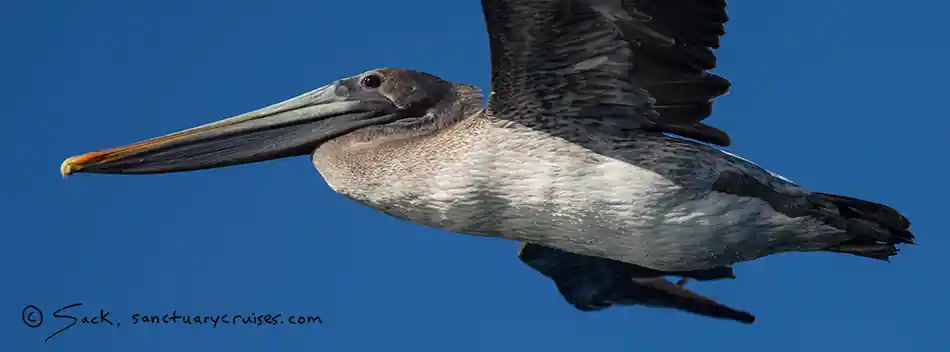
Brown Pelican
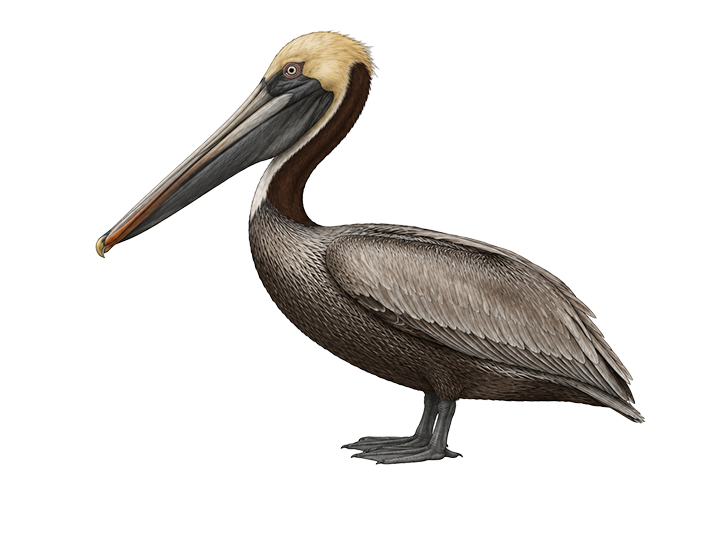
California's most iconic coastal bird. Brown Pelicans were once endangered but have made a spectacular comeback. We see them year-round along the bay, often diving dramatically from height to catch anchovies near the surface.
- Scientific name: Pelecanus occidentalis californicus
- Wingspan: 6–7 ft (1.8–2.1 m) | Weight: 6–12 lbs
- Dive speed: Plunge-dive from heights of 60 ft — impact absorbed by air sacs under the skin
- Gular pouch: Can hold 3 gallons of water and fish — drained before swallowing
- Diet: Anchovies, sardines, herring — surface-schooling fish
- Conservation status: Least Concern (IUCN) — fully delisted from US Endangered Species list in 2009
Brown Pelicans were nearly wiped out by DDT, which caused eggshell thinning and reproductive failure. After DDT was banned in 1972, populations recovered dramatically. California Brown Pelicans are one of the great conservation success stories. They breed on Channel Islands and Santa Barbara Island and disperse north to Monterey Bay and beyond after nesting. Their spectacular plunge-dives — sometimes from 50 feet — are one of the great sights of the California coast.
Black-Footed Albatross
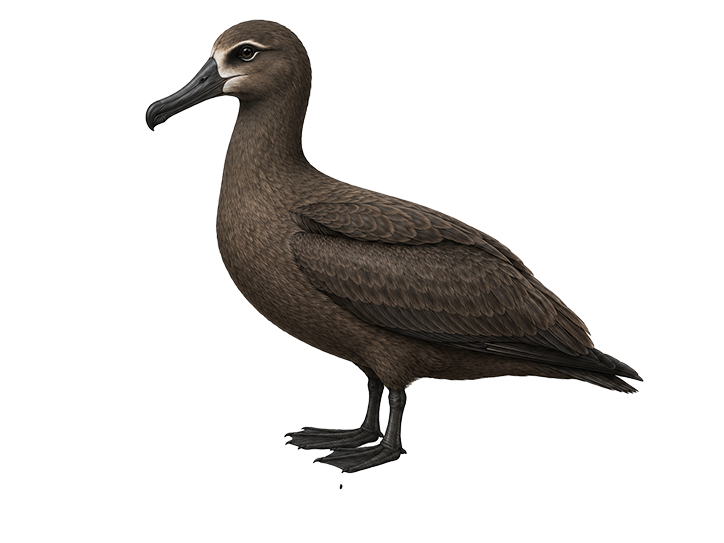
One of the great wanderers of the Pacific. With a wingspan of up to seven feet, albatross soar effortlessly on wind and updrafts far offshore. We encounter them on our longer offshore trips during winter and spring.
- Scientific name: Phoebastria nigripes
- Wingspan: 6–7.5 ft (1.9–2.3 m) | Weight: 5.5–8 lbs
- Lifespan: Up to 40+ years; breeds annually
- Breeding: Nests on Northwestern Hawaiian Islands (Midway, Laysan); returns every year to the same partner
- Flight: Dynamic soaring — extracts energy from wind shear, rarely flapping; can travel 1,000 km per day
- Conservation status: Near Threatened (IUCN) — threatened by longline fishing bycatch and plastic ingestion
Albatross spend the vast majority of their lives at sea, coming ashore only to breed. They drink seawater, excreting excess salt through a gland above the bill. A black-footed albatross gliding alongside the boat — effortlessly banking on 7-foot wings — is one of the most memorable wildlife encounters possible on Monterey Bay.
Sooty Shearwater
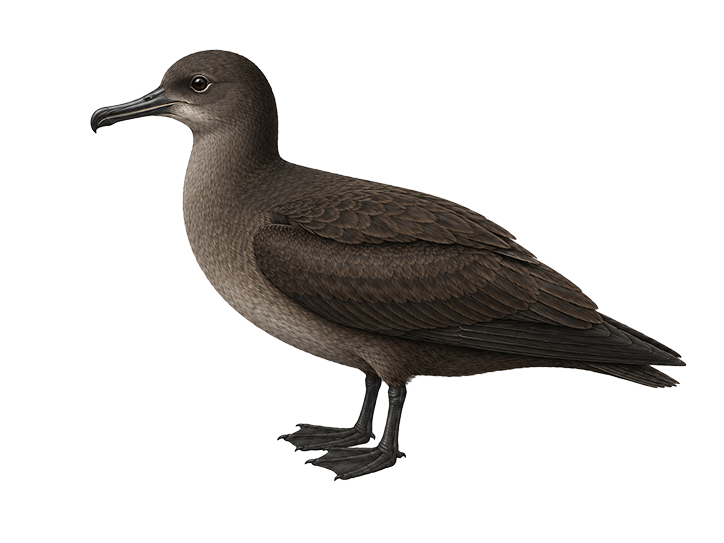
Shearwaters migrate from the Southern Hemisphere in extraordinary numbers — flocks of tens of thousands are common over Monterey Bay in summer. Their synchronized low-over-the-water flight is mesmerizing.
- Scientific name: Ardenna grisea
- Wingspan: 3–3.5 ft (0.9–1.1 m) | Weight: 1.5–2 lbs
- Migration: Breed in New Zealand and Chile (Oct–Mar), then migrate to the North Pacific — one of the longest migrations of any bird (40,000+ miles round trip)
- Flight: Stiff-winged gliding arcs just above wave tops — "shearing" the surface
- Diving: Can dive to 220 ft (67 m) to pursue prey
- Conservation status: Near Threatened (IUCN) — declining due to bycatch and climate shifts
In peak summer, Monterey Bay can host millions of sooty shearwaters simultaneously. They fly in tight flocks that wheel and bank in unison over the water, diving en masse when they locate a bait ball. Feeding frenzies involving shearwaters, pelicans, sea lions, dolphins, and humpback whales all working the same school of anchovies are a signature Monterey Bay experience.
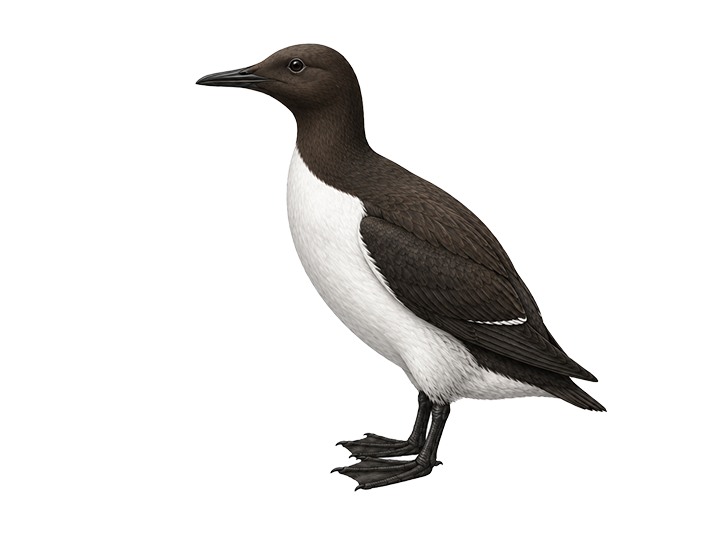
Common Murre
Tuxedo-clad diving birds that breed on offshore rocks and hunt fish underwater. Murres are part of the rich seabird communities that thrive here year-round, feeding on the same prey as the whales below them.
- Scientific name: Uria aalge
- Length: 15–17 in (38–43 cm) | Wingspan: 25–27 in
- Dive depth: Up to 590 ft (180 m) — among the deepest diving of any flying bird
- Diet: Fish (sand lance, herring, anchovies), squid, crustaceans
- Breeding: Nests on narrow cliff ledges in dense colonies; single pear-shaped egg prevents rolling off ledge
- Conservation status: Least Concern (IUCN)
Common Murres are sometimes called the "penguins of the North" for their upright stance on land and black-and-white colouring, though they are unrelated. They use their wings to "fly" underwater, reaching depths where they compete directly with dolphins for the same fish. Their colonies on offshore rocks like Bird Rock near Point Lobos produce enormous quantities of guano that fertilises the surrounding ocean.
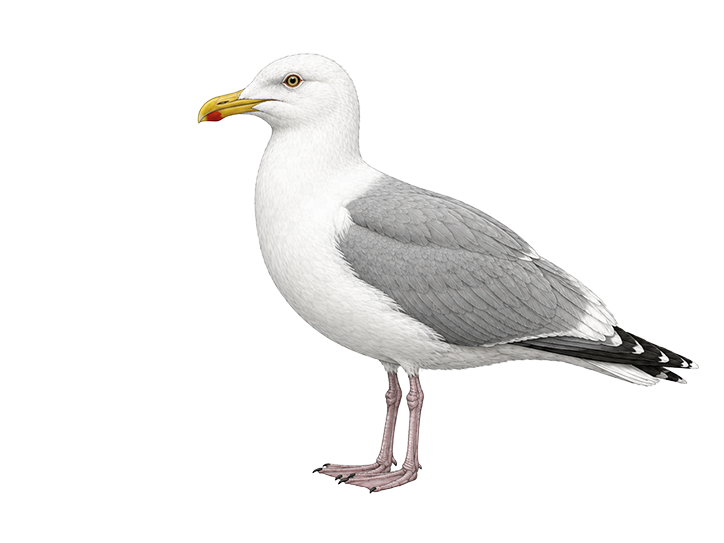
Western Gull
The classic big gull of the California coast. Western Gulls nest on offshore rocks in vast colonies and are always part of the scenery — often following the boat and picking off prey disturbed by our wake.
- Scientific name: Larus occidentalis
- Length: 22–27 in (56–68 cm) | Wingspan: 4.5–5 ft
- Identification: White head, dark slate-grey back and wings, pink legs, yellow bill with red spot on lower mandible
- Diet: Fish, invertebrates, carrion, eggs of other seabirds — a highly opportunistic generalist
- Breeding: The only gull that breeds exclusively on the Pacific Coast of North America
- Conservation status: Least Concern (IUCN)
Western Gulls are the dominant large gull on Monterey Bay and one of the most adaptable seabirds in the world. They nest in colonies on offshore islands and rocks, returning to the same nest site year after year. During multispecies feeding events they are always present, working the edges of bait balls to snatch fish driven to the surface by dolphins and humpbacks below.
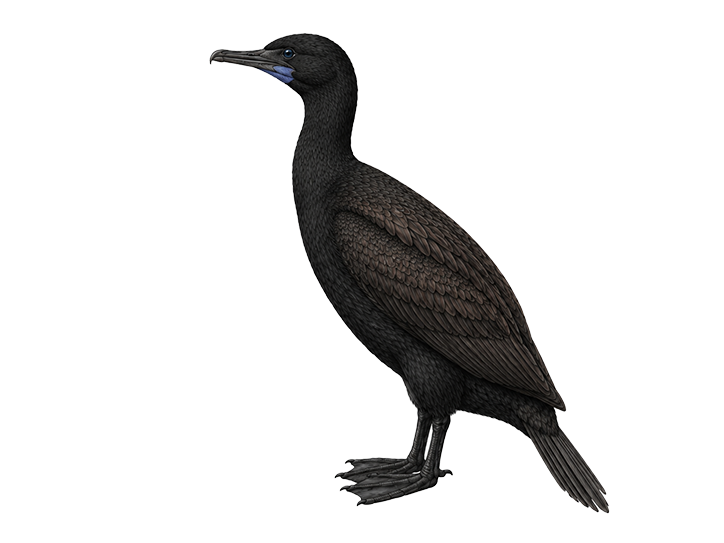
Brandt's Cormorant
Powerful deep divers that hunt fish in the bay. Brandt's Cormorants nest in huge colonies on offshore rock stacks and are seen year-round — their low, laboured flight and compact silhouette make them easy to identify.
- Scientific name: Urile penicillatus
- Length: 27–35 in (69–89 cm) | Wingspan: 4 ft
- Identification: Entirely black with a blue throat pouch (bright blue in breeding season); pale buffy chin patch
- Dive depth: Up to 200 ft (60 m); pursues fish underwater using feet for propulsion
- Diet: Schooling fish — anchovies, sardines, rockfish
- Conservation status: Least Concern (IUCN) — largest colony at Point Reyes; also breeds at Point Lobos near Monterey
Brandt's Cormorants lack waterproofing oil in their feathers — which makes them more hydrodynamic underwater but means they must dry their wings after diving. The characteristic wing-spread pose on rocks is their way of air-drying. Breeding males develop brilliant blue throat pouches and white plume feathers; it is one of the more striking courtship displays of any California seabird.
See them from the water
The best seabird encounters happen far offshore — join us on the bay to see species you can never spot from land.
Book a Whale Watching Cruise