
Pinnipeds & Sea Otters
Sea otters, sea lions, harbor seals, and elephant seals — the mammals of Moss Landing and Monterey Bay that you'll encounter on every trip.
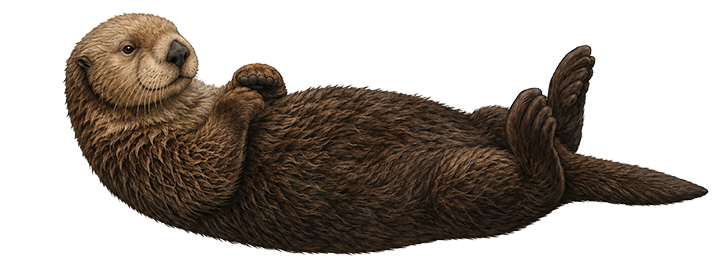
Sea Otter
Our most beloved resident. Sea otters float on their backs in the kelp beds of Elkhorn Slough and Moss Landing harbour, often with pups resting on their chests. We see them on every single trip — and they are as enchanting every time.
- Scientific name: Enhydra lutris nereis (Southern Sea Otter)
- Length: 4–5 ft (1.2–1.5 m) | Weight: 45–65 lbs
- Fur density: 1 million hairs per sq inch — the densest fur of any mammal; no blubber
- Diet: Sea urchins, crabs, clams, abalone, mussels — uses rocks as tools on chest to crack shells
- Ecology: Keystone species — controls sea urchin populations, which protects kelp forests
- Conservation status: Endangered (IUCN) — California population ~3,000
Sea otters were hunted to near-extinction for their pelts in the 18th and 19th centuries. The California population was reduced to fewer than 50 animals by 1915. Today, about 3,000 survive along the central California coast. Elkhorn Slough — right next to Moss Landing — supports one of the highest densities of sea otters in the world, and we see them on every trip.
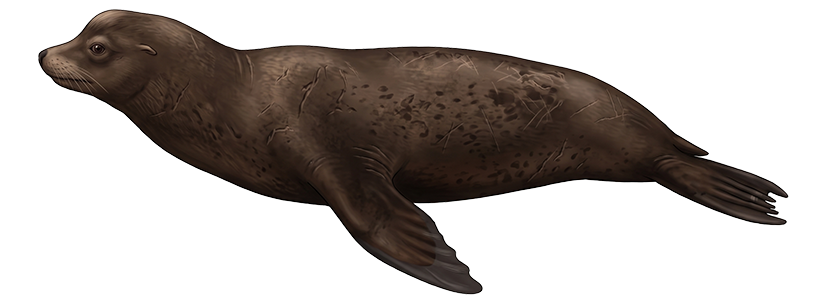
California Sea Lion
The noisy, agile showoffs of the bay. Sea lions haul out on the docks at Moss Landing and hunt year-round. When a whale is feeding, sea lions are rarely far behind — diving through the same bait balls with impressive speed.
- Scientific name: Zalophus californianus
- Length: Males 7–8 ft (2.1–2.4 m), up to 770 lbs; females considerably smaller at ~220 lbs
- Speed: Up to 25 mph in the water — the fastest pinnipeds
- Dive depth: Up to 900 ft (275 m); can hold breath for 10 minutes
- Diet: Anchovies, sardines, squid, salmon — highly opportunistic
- Conservation status: Least Concern (IUCN) — US population around 300,000
California Sea Lions are highly intelligent and social animals with complex vocalizations. Males develop a bony crest on their skull (the sagittal crest) as they mature, making them easy to distinguish from females. Their barking calls and acrobatic underwater hunting make them a highlight of every trip — they frequently join active whale feeding events, diving beneath humpbacks to steal scraps from bubble-net bait balls.
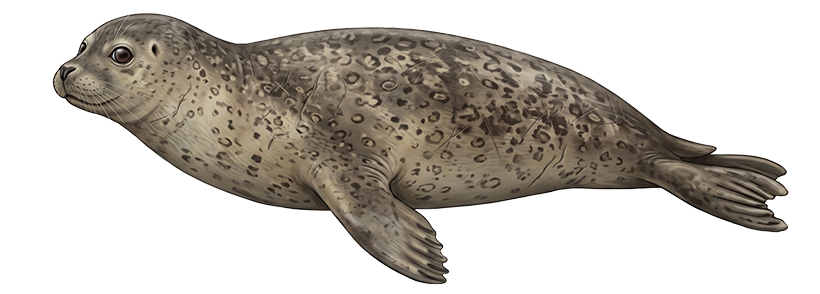
Harbor Seal
Spotted and curious, harbor seals haul out on sandbars and rocky ledges throughout the bay. Unlike sea lions they are solitary hunters, and will often pop up alongside the boat to eye passengers with equal curiosity.
- Scientific name: Phoca vitulina
- Length: 4.5–6 ft (1.4–1.9 m) | Weight: 110–370 lbs
- Identification: Round dog-like head; short flippers; spotted coat ranging from light grey to dark brown
- Dive depth: Up to 1,600 ft (500 m); can remain submerged for 28 minutes
- Diet: Fish, squid, octopus, crustaceans
- Conservation status: Least Concern (IUCN)
Harbor seals cannot rotate their hind flippers forward — they move on land by undulating their body like a caterpillar. Unlike sea lions, they are generally quiet and solitary. Pups are born able to swim, and mothers can delay implantation of embryos to time births for optimal conditions. The Moss Landing harbour and surrounding sloughs are important pupping habitat.
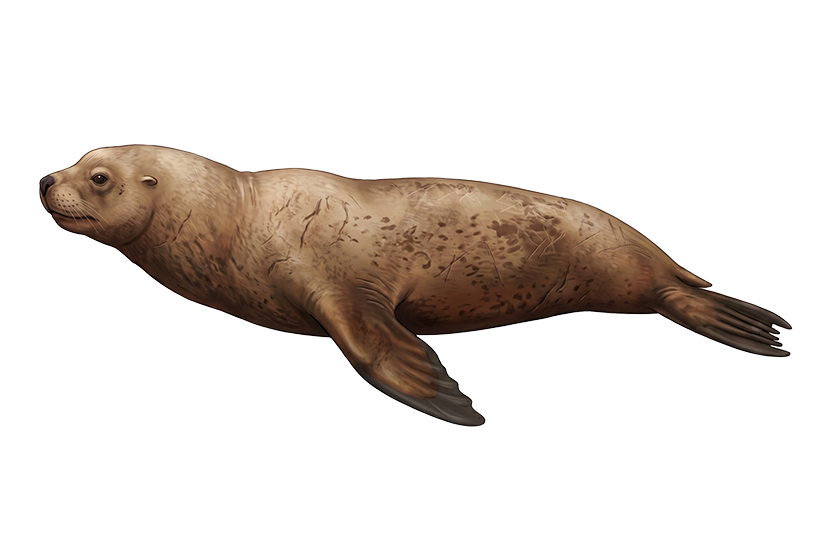
Steller Sea Lion
Much larger than their California cousins — males can reach 2,500 lbs. Stellers move south into Monterey Bay in fall and winter, often joining mixed haul-out groups at the harbour. Their sheer size next to California Sea Lions is remarkable.
- Scientific name: Eumetopias jubatus
- Length: Males up to 11 ft (3.4 m) and 2,500 lbs; females up to 7.5 ft and 770 lbs
- Colour: Tawny buff to light brown; lighter than California Sea Lions; males develop a thick mane
- Diet: Fish (pollock, herring, halibut), squid, octopus — and occasionally seals and sea otters
- Range: Alaska to central California; Monterey is near the southern limit of winter range
- Conservation status: Near Threatened (IUCN) — Eastern population recovering; Western population still declining
Steller Sea Lions are the largest eared seals in the world. A large male hauled out next to a California Sea Lion is a striking size comparison — Stellers can be 3 to 4 times heavier. When they turn up at Moss Landing in winter they frequently dominate the dock space, displacing their smaller California cousins.
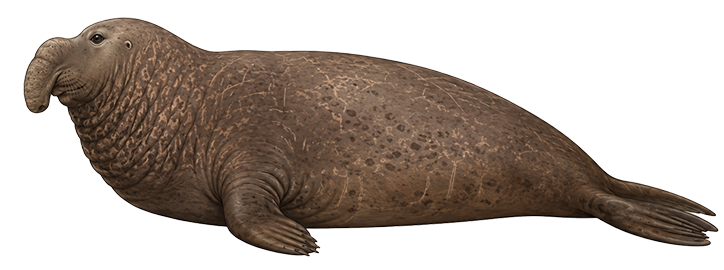
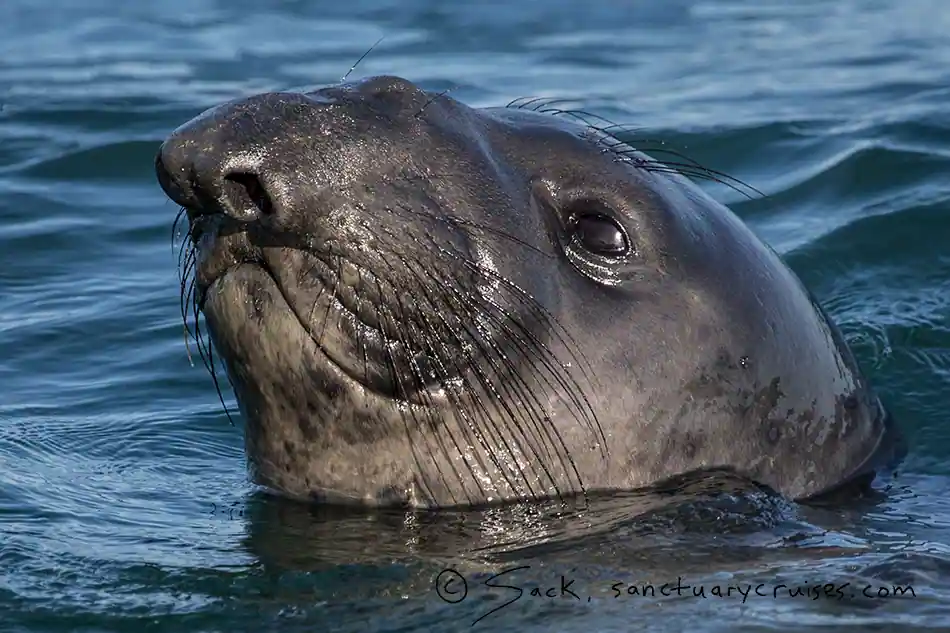
Northern Elephant Seal
The largest pinniped in the Northern Hemisphere. Elephant seals pup at nearby Año Nuevo State Park in winter and we sometimes encounter them hauled out at sea, floating motionless on their way to and from deep-water feeding grounds.
- Scientific name: Mirounga angustirostris
- Length: Males up to 14 ft (4.3 m) and 4,500 lbs; females up to 10 ft and 1,300 lbs
- Dive depth: Up to 5,000 ft (1,500 m) — one of the deepest-diving mammals on Earth
- Dive duration: Up to 2 hours; averages 20–30 minutes between dives
- Diet: Deep-sea fish, squid, rays, and small sharks
- Conservation status: Least Concern (IUCN) — recovered from near-extinction; now ~200,000
Northern Elephant Seals were hunted to fewer than 100 individuals by the late 1800s. After full protection they recovered to around 200,000 today — one of conservation's great success stories. Males develop the distinctive inflatable proboscis (nose) used for amplifying calls during breeding battles. When encountered at sea they are often "logging" — floating motionless at the surface recovering between epic deep dives.
Meet them in person
Sea otters at the harbour, sea lions on the docks — and elephant seals drifting offshore. We see them on every trip.
Book a Whale Watching Cruise