
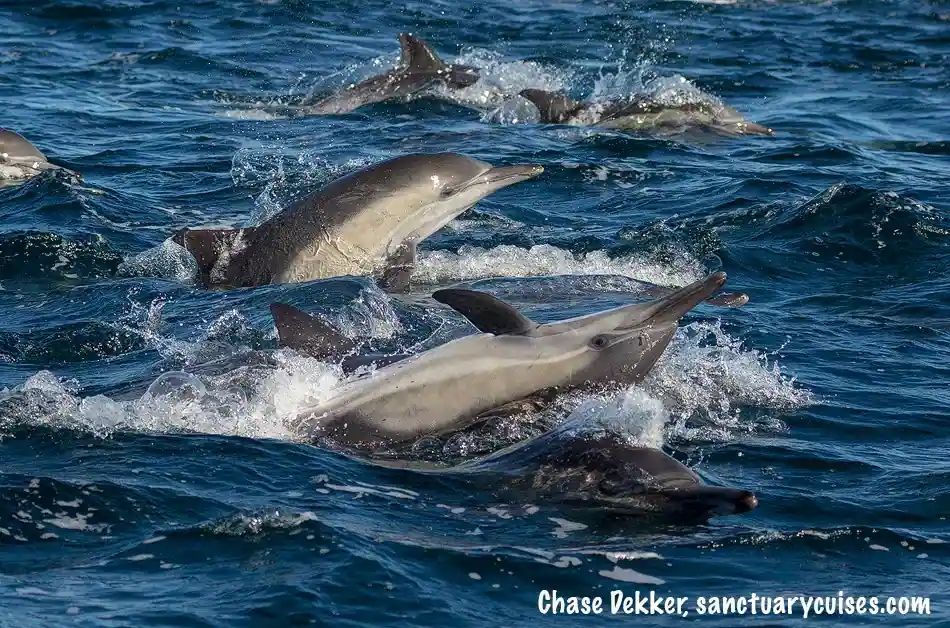
Dolphins of Monterey Bay
Four species of dolphins call the bay home — and on the right day, they show up by the thousands.
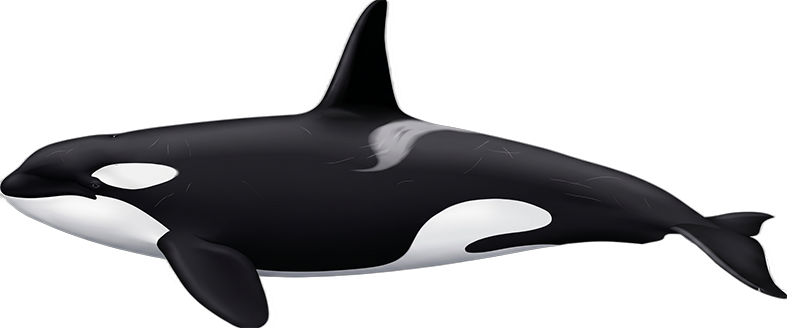
Orca / Killer Whale
Apex predators of the bay and the largest member of the dolphin family. Transient orcas come into Monterey in spring to hunt migrating gray whale calves, one of the most dramatic wildlife events on the West Coast. We also encounter offshore and resident pods on occasion.
- Scientific name: Orcinus orca
- Length: 20–26 ft (6–8 m) | Weight: 6–8 tons
- Ecotypes in Monterey: Transient (Bigg's) orcas — mammal hunters; occasional offshore orcas
- Speed: Up to 34 mph (55 km/h) — the fastest marine mammal
- Diet (Transient): Sea lions, harbor porpoise, gray whale calves, dolphins
- Conservation status: Data Deficient (IUCN) — ecotype populations vary widely
Transient orcas hunt in family groups using sophisticated cooperative tactics. The annual gray whale calf migration in April and May draws orca families into Monterey Bay to intercept calves travelling with their mothers — a dramatic and unforgettable encounter.
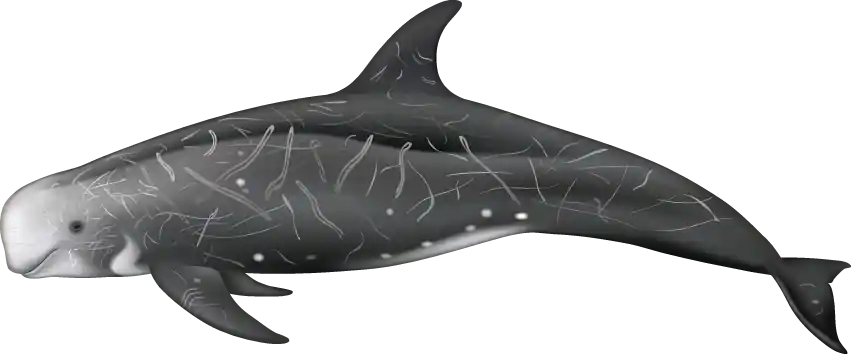
Risso's Dolphin
Distinctive white, heavily scarred bodies and blunt, rounded heads. Risso's are deep-water squid hunters and one of Monterey Bay's most reliable dolphin sightings — pods of 10 to 200 are common year-round.
- Scientific name: Grampus griseus
- Length: 10–13 ft (3–4 m) | Weight: 660–1,100 lbs
- Identification: Grey body becomes increasingly white with age due to scarring from squid beaks and other dolphins; prominent melon-shaped head with a crease down the centre
- Diet: Almost exclusively squid — dives to over 1,000 ft
- Lifespan: Up to 35 years
- Conservation status: Least Concern (IUCN)
Risso's are social animals that form strong bonds within their pods. The deep Monterey Submarine Canyon offers ideal hunting grounds — squid rise into the water column at night, and Risso's are often seen at the canyon edge. Their extensive scarring tells the story of a lifetime of deep dives and squid encounters.
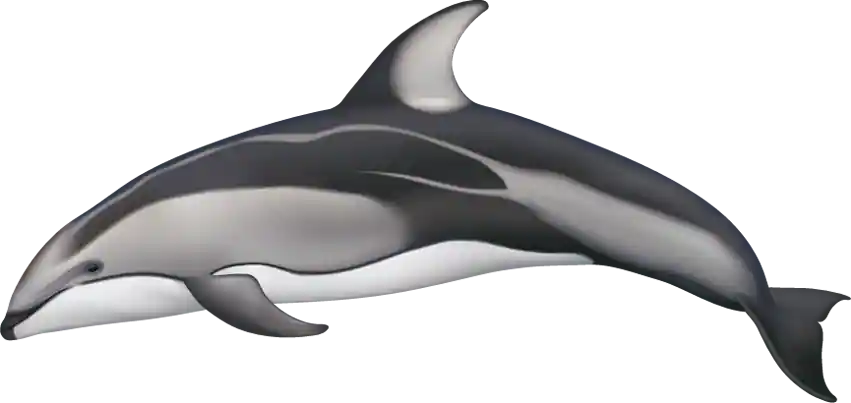
Pacific White-Sided Dolphin
Acrobatic, fast, and famously friendly toward boats. Pacific White-Sideds travel in pods of hundreds — sometimes thousands — and routinely bow-ride alongside Sanctuary, leaping and spinning alongside the hull.
- Scientific name: Lagenorhynchus obliquidens
- Length: 5.5–7.5 ft (1.7–2.3 m) | Weight: 130–200 lbs
- Identification: Dark back, white belly, grey flank patch, short thick beak; distinctive pale stripe from eye to tail
- Speed: Up to 25 mph — frequently leaps clear of the water
- Diet: Squid, anchovies, hake, and other small fish
- Conservation status: Least Concern (IUCN)
Pacific White-Sided Dolphins are among the most exuberant animals on the bay. Superpods of 1,000 or more are not unusual in Monterey during winter and spring, and they actively seek out moving boats to bow-ride. On a big-pod day, the view from the bow is unforgettable.

Long-Beaked Common Dolphin
Hourglass flank pattern, slim build, and a love of company. Common dolphin superpods can stretch for miles across the bay, putting on some of the most jaw-dropping wildlife displays imaginable.
- Scientific name: Delphinus capensis
- Length: 6–8 ft (1.9–2.5 m) | Weight: 160–500 lbs
- Identification: Distinctive hourglass pattern — yellow/tan forward flank, grey aft; long narrow beak; V-shaped chest patch
- Diet: Schooling fish (anchovies, sardines, mackerel) and squid
- Social structure: Forms superpods of 1,000–100,000 individuals
- Conservation status: Least Concern (IUCN)
Common Dolphins are highly vocal and communicative, using a wide range of clicks and whistles. In summer and fall, large bait balls of anchovies draw them into Monterey Bay in enormous numbers. Working together with seabirds above and whales below, they herd prey to the surface in spectacular multispecies feeding frenzies.
Northern Right Whale Dolphin
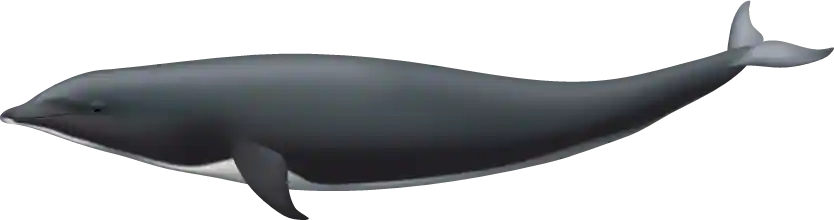
No dorsal fin and an inky black-and-white body — they look unlike any other dolphin. Often travel mixed in with Pacific White-Sided pods, leaping in unison in long, low arcs across the bay.
- Scientific name: Lissodelphis borealis
- Length: 6.5–10 ft (2–3 m) | Weight: 130–250 lbs
- Identification: The only dolphin in the North Pacific with no dorsal fin; black above, white below with a narrow white chest patch; extremely slender body
- Speed: Can sustain 25 mph in long, low, porpoising leaps
- Diet: Mesopelagic fish and squid at depth
- Conservation status: Least Concern (IUCN)
The absence of a dorsal fin is the result of living in the open ocean where there are no rocks to navigate around — an evolutionary trade-off for speed and hydrodynamics. Northern Right Whale Dolphins are almost always found in mixed groups with Pacific White-Sided Dolphins, and the two species appear to actively seek each other's company.
Pacific offshore bottlenose dolphin
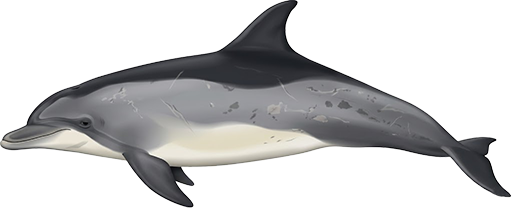
Bold and charismatic visitors from offshore waters. Pacific offshore bottlenose dolphins are larger and more robust than their coastal cousins, roaming the open ocean in impressive superpods before sweeping into Monterey Bay to surf bow waves and put on a show.
- Scientific name: Tursiops truncatus
- Length: 8–12 ft (2.4–3.7 m) | Weight: 300–1,400 lbs
- Ecotype: Offshore bottlenose — stockier and darker than inshore populations
- Pod size: Typically 20–200 individuals; superpods of 1,000+ occasionally reported
- Diet: Fish, squid, octopus — cooperative hunting in deep offshore waters
- Conservation status: Least Concern (IUCN)
Offshore bottlenose dolphins are highly intelligent and intensely social, using coordinated tactics to herd and corral prey. When they appear in Monterey Bay they are immediately recognizable by their size and confidence — charging bow waves, leaping alongside the boat, and vocalizing loudly. Their visits are unpredictable, which makes an encounter all the more memorable.